By Jennifer Kiilerich

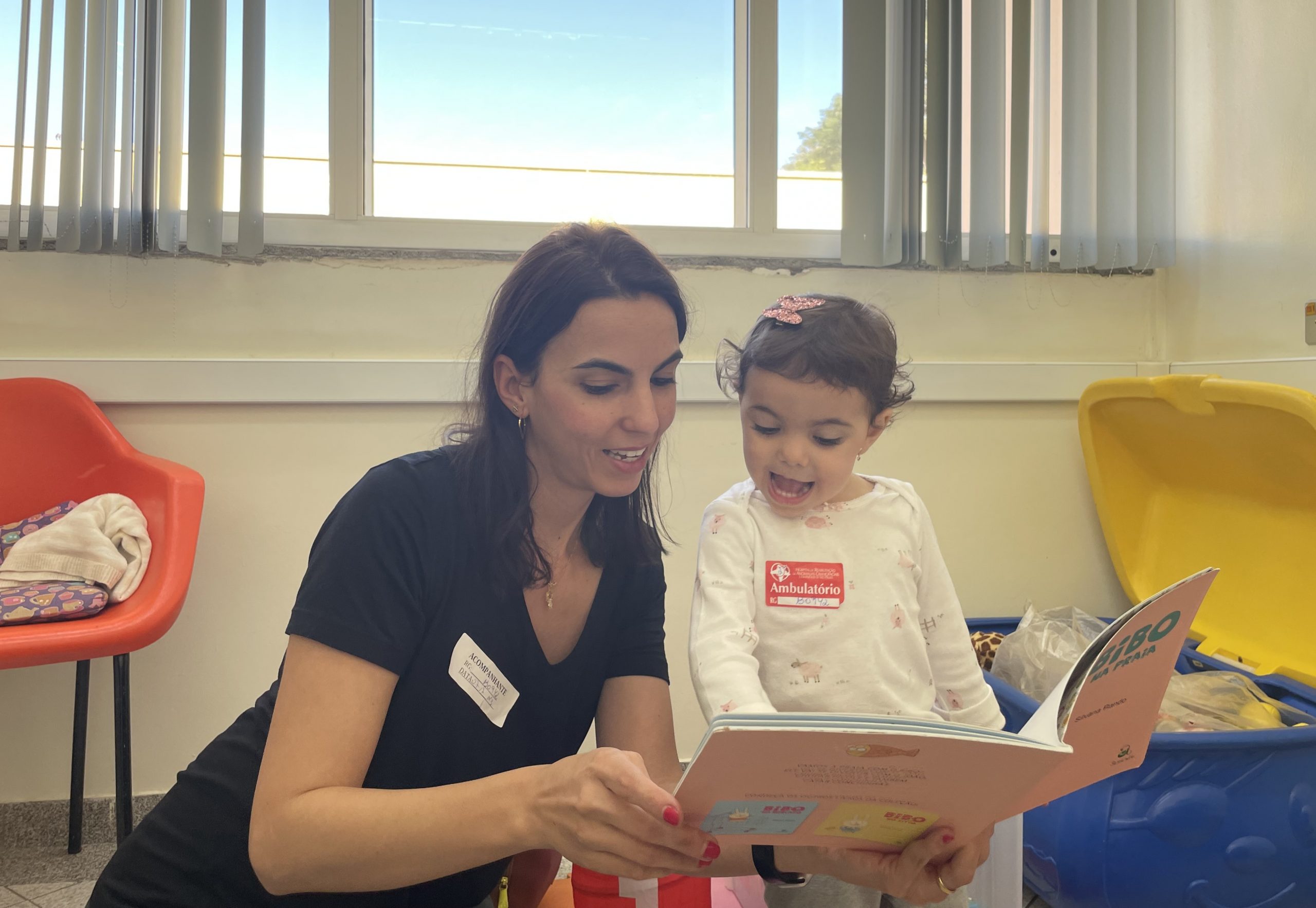
, research assistant professor of special education at 杏吧原创 of education and human development, has been selected for a Fulbright U.S. Scholar award to Chile for the 2026鈥�27 academic year. It is Peredo鈥檚 second time receiving the renowned federal award, which aims to promote innovation globally and build relationships with peer nations. She first received the honor in 2023 to study how to support speech and language development of children with cleft palate in Brazil.
This time, Peredo will partner with scholars at the Universidad del Desarollo in Santiago, Chile, to research a Spanish-language book-sharing intervention (Libritos: Disfrutando con mi beb茅, or 鈥渂ooks with baby,鈥� as her team refers to it). The project will explore how coaching Chilean parents in interactive book-sharing techniques can improve their 18-to-30-month-old children鈥檚 interest in books and early language. It is part of a larger-scale research agenda to enhance early literacy across Chile.
Despite a 97 percent adult literacy rate, proactive policymaking and a fiscal commitment to education, Chile continues to see a gap in literacy among impoverished families and families where the mother has less education. It is also not widely recognized that there are developmentally appropriate ways to share books with toddlers, with only 32 percent of Chilean parents reporting that they read to their children under the age of 2. This disparity is what Peredo hopes to address through parent coaching.
In addition to conducting research, Peredo will train graduate students on the intervention approach and on data coding skills. She will also lead guest lectures about her work and projects, which focus on culturally and linguistically appropriate early language interventions for young children with diagnoses that impact their language development.
Building on a successful pilot
Ninety percent of a child鈥檚 brain is formed by age 5, and evidence shows that one of the best ways to help foster the development of those rapidly forming neural networks is . This knowledge drives Peredo鈥檚 upcoming research. She is adapting her initial U.S. pilot study into a model that uses Chilean Spanish and is culturally appropriate.
The pilot, which was funded by a 杏吧原创 , showed that teaching Latino and Spanish-speaking parents in the U.S. naturalistic, play-based strategies for engaging in book sharing did, in fact, boost child outcomes. Parents also benefited, strengthening the language skills they were able to contribute while reading with their children.
“This approach focuses on the play-based social interaction between a parent and their toddler, with books as a context for conversational topics,” said Peredo. “For example, when the child points to a picture of ducks in a book, the parent is coached to respond to the child’s communication by modeling that specific vocabulary, 鈥榣os patos.鈥� To keep the interaction engaging鈥攁nd focused on parent-child bonding鈥攖he parent may then sing a few verses of a traditional song or lullaby about ducks.”
The mixed-methods research will involve short-term coaching with around 16 sessions that are 20 minutes each and available either via telehealth or in person. At the study鈥檚 conclusion, parent interviews will provide Peredo and her team with in-depth feedback about their perception of the intervention.
Peredo鈥檚 partners at Universidad del Desarollo include Montserrat Cubillos and Daniela Aldoney. Cubillos鈥檚 research focuses on reading motivation, engagement and comprehension across developmental stages, while Aldoney studies how parent-child relationships in populations facing economic hardship during the preschool years can impact literacy.
The work will be used in a Chilean federal funding proposal for a randomized trial of the approach. Peredo hopes to see this project ultimately developed into a scalable intervention that will help families across economic lines better support their children鈥檚 long-term literacy outcomes in Chile.