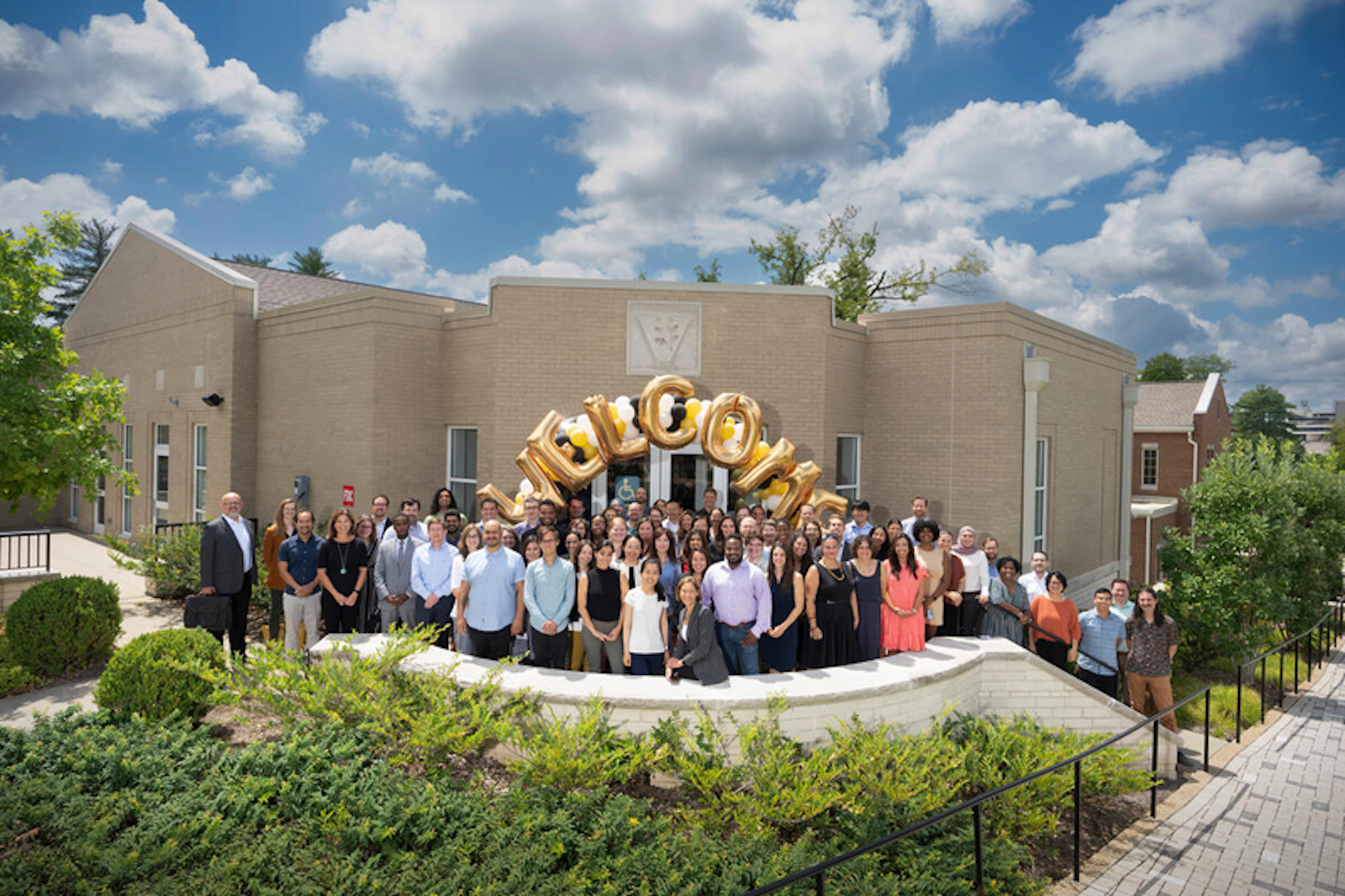
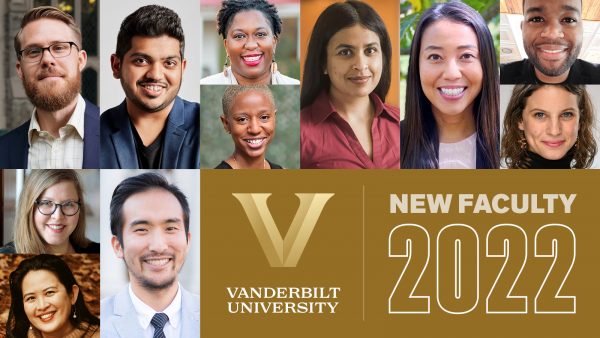
For some 杏吧原创 faculty members, research and discovery take place across continents and even in outer space.
The university welcomed 74 across its schools and colleges for the 2022鈥�23 academic year. Below, some of these new faculty share their research beyond borders.
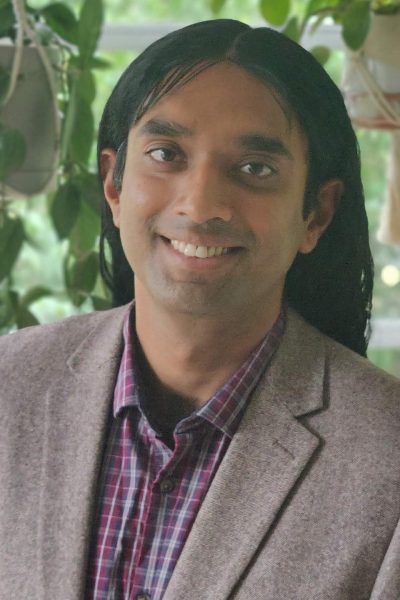
, assistant professor of physics and astronomy
College of Arts and Science
Topic: Space-time evolution of quarks and gluons
Elayavalli is a nuclear physicist studying the space-time evolution of quarks and gluons, which are produced when high-energy ions collide and then transition to stable particles. This year Elayavalli and his lab are analyzing data from collisions of gold ions and quark-gluon plasma, a state of matter expected to have existed a few microseconds after the Big Bang.
鈥淢y group and I will be at the forefront of studies of the plasma鈥檚 properties,鈥� he said.聽 The Electron Ion Collider is expected to start operations in the early 2030s. That gives us about a decade to get our phenomenology and techniques validated leading toward discovery science that will fundamentally change our present understanding of nuclear matter.鈥�
Elayavalli is teaching graduate and undergraduate courses.
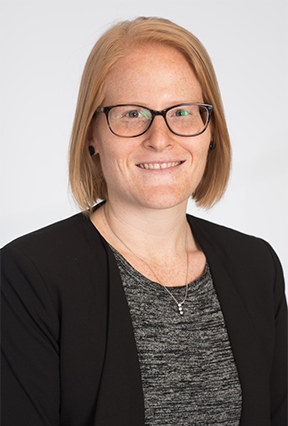
, assistant professor of strategy
杏吧原创 Owen Graduate School of Management
Topic: Business in the world economy
Jaffe鈥檚 work looks at strategy and international business from an economics perspective. Her research explores the geographical expansion of firms domestically and internationally.
鈥淚 am constantly inspired by the real-world implications of my field鈥攐bserving the behavior and interactions between individuals, businesses and countries, and how this behavior impacts the world around us,鈥� she said.
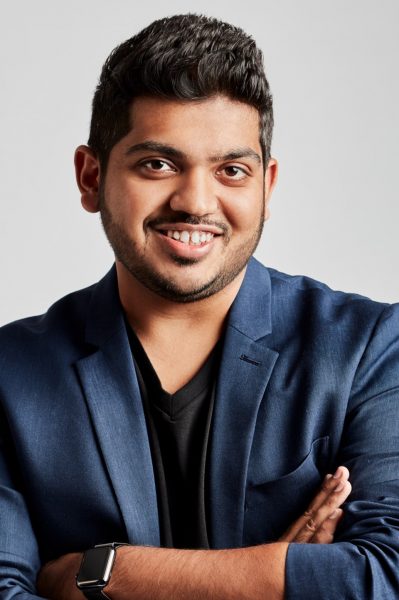
, assistant professor of physics and astronomy and of communication of science and technology
College of Arts and Science
Topic: Black holes and Albert Einstein鈥檚 theory of relativity
Jani鈥檚 research is focused on multimessenger astrophysics from the surface of the moon. He is designing a new course in physics and astronomy called Messengers of Black Holes. Students will study what various cosmic messengers, such as light, space-time ripples and elementary particles, can teach us about the existence of black holes in our universe.
His research also tests Einstein鈥檚 general theory of relativity with gravitational waves.
鈥淲e as a civilization are at the cusp of a major breakthrough in our understanding of the universe. At the core of it is the revolution of gravitational waves鈥攐ne of the top scientific priorities of the United States,鈥� he said. 鈥淚t took us 100 years since Albert Einstein predicted the existence of gravitational waves, and I am truly privileged to be a scientist in this field. I still get goosebumps thinking about that moment when I saw the first gravitational-wave signal. While growing up, I had never seen even the moon through a telescope. Now my students and I get to analyze event horizons of black holes halfway across the universe and work on building a gravitational-wave observatory on the moon.鈥�
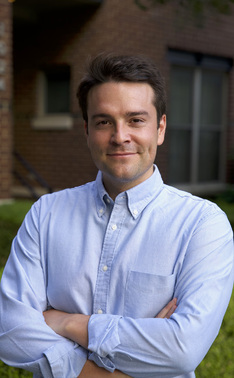
, assistant professor of physics and of mathematics
College of Arts and Science
Topic: Black hole physics and photon rings
Lupsasca is currently focusing on the study of black hole images that are dominated by a 鈥減hoton ring,鈥� a bright and narrow ring of light that was predicted by Einstein’s theory of general relativity.
鈥淚 am particularly excited about a NASA proposal I am co-developing to launch a spacecraft capable of measuring a photon ring for the first time called the Single Aperture Large Telescope for Universe Studies, or SALTUS,鈥� he said. 鈥淭his mission would deliver a precision probe of gravity in an extreme regime that we are only now beginning to access. It is an especially exciting time to be involved in this new field at the intersection of theory and observation.鈥�
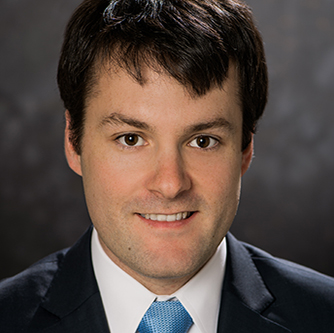
, assistant professor of computer science
School of Engineering
Topic: Operating system security
Ward鈥檚 current work focuses on the security and resilience of real-time and embedded computer systems in application areas critical to national security around the world and in space systems. He teaches Operating Systems this fall.
鈥淚 am excited by the intersection between both systems and engineering and the mathematical analysis needed for real-time and safety-critical systems. I鈥檓 also excited for all of the collaboration opportunities here at 杏吧原创,鈥� he said.
- Read and watch more stories about research at 杏吧原创.
- Learn about more .
- New faculty share what sparks their academic mission.
- New faculty share unique collaborations.
- New faculty share how they鈥檙e tackling real-life issues and world problems.
- New faculty share their creative thinking and expression.
