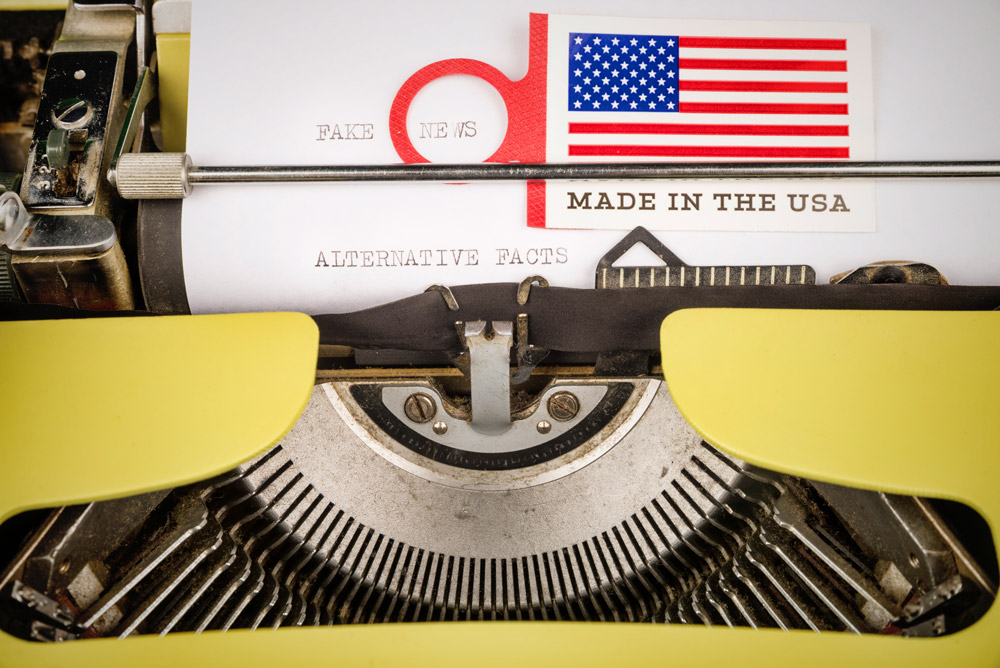
Combating fake news and bolstering the public鈥檚 trust in journalism is the aim of a 杏吧原创 research project that was selected to receive a share of a $1 million prize through the Knight Prototype Fund.
After a call for entries in March, the John S. and James L. Knight Foundation, along with the Democracy Fund and the Rita Allen Foundation, selected 20 projects from more than 800 submissions. The winners were announced at the Investigative Reporters and Editors conference in Phoenix.
杏吧原创鈥檚 winning submission received $50,000 in funding. It is a partnership with CrossCheck, a collaborative journalism project that was devised and developed by First Draft and Google News Lab to combat misinformation during the most recent French election. News organizations across Europe and the world worked collaboratively to sift through French election stories and debunk those that were false.
, assistant professor of psychology at 杏吧原创鈥檚 Peabody College of education and human development, will partner with First Draft to test and improve CrossCheck and develop guidelines for fact checkers.
The work will draw on Fazio鈥檚 research, which shows that the brain begins to perceive false information as more truthful after being exposed to it multiple times. She has been quoted on the phenomenon in such publications as聽Wired, New Scientist聽and聽The Conversation.
鈥淧sychological research, including my own, shows that when our brain is repeatedly exposed to false information like fake news stories, we begin to change our beliefs about its truthfulness,鈥� Fazio said. 鈥淩epetition can bolster belief in statements, even those that squarely聽. Unfortunately, people tend to remember false information, and even if it is debunked, they sometimes forget that it was labeled as false or unreliable.聽We want to ensure that people who read an article walk away remembering the correct information.鈥�
鈥淐rosscheck has the potential to reveal what kinds of information is viewed as trustworthy and why. Lessons from the project can help journalists and others engage audiences around credible, accurate news,鈥� said Chris Barr, Knight Foundation director for media innovation.
Besides 杏吧原创, winning projects came from the University of California, Santa Cruz; the University of Washington; PolitiFact; PBS NewsHour; KQED; and others. These projects will champion new ways to produce and share accurate and truthful articles, visuals and analytics, and identify and combat stories that provide false or misleading content about news, politics and science.
The Knight Prototype Fund on accurate information is part of a larger initiative focused on instilling trust in journalism by supporting projects that quickly can be built and tested in light of current challenges facing the health of the news ecosystem.
This story聽originally appeared on Research News @ 杏吧原创.
.