The exceptionally talented鈥攖hose with the ability to be competitive athletes, music stars, top chefs and Navy SEALS鈥攁re identified, cultivated and celebrated. But in the classroom, academically gifted children, potentially the next generation鈥檚 leaders and innovators, are often left to fend for themselves. With federal dollars and teachers鈥� efforts primarily focused on the students who struggle, there are few programs in place to nurture the intellectually precocious child. Is there a cost to society for ignoring the gifted?
Peabody Psychology Professor and , Patricia and Rodes Hart Dean of Education, believe there is, and they have the data to prove it. The two co-direct the landmark Study of Mathematically Precocious Youth, the world鈥檚 longest running longitudinal study of intellectually talented children. In their latest paper, they explore these questions and more.
Their study, known as , identified some of the nation鈥檚 smartest students over a 25-year period, most at about age 13, and has tracked them ever since. Lubinski believes that some of these students, sometimes labeled the 鈥渟cary-smart,鈥� are the people who will solve the problems of tomorrow, so it is important to identify them at an early age and nurture their development.
Seven books and nearly 300 articles have been based on the study. 鈥淲ho Rises to the Top,鈥� published in 2013 by Psychological Science, is the latest. It was written by Lubinski, Benbow and postdoctoral fellow Harrison J. Kell. The New York Times, Newsweek, The Boston Globe, Slate and Huffington Post, among others, have published stories on the article.
鈥淭his topic is especially popular now because you have gifted schools closing,鈥� Lubinski said. 鈥淲e live in a flat world, a global economy. We know that the world has become more complex, and there鈥檚 a war on for talent. People have become more aware of the presence of math in nearly everything. We want our CEOs to be able to keep key data straight. We want security forces to be able to analyze data to protect us against terrorism. We need to solve the health care problem.
鈥淭o advance our culture, or even just maintain it, we need to nurture our best intelligence resources. We need to identify and develop our human capital,鈥� he said.

“We need to raise the ceiling for our students with the highest potentials.”
鈥擟amilla Benbow
Benbow led a National Science Board task force that wrote the 2010 report 鈥淧reparing the Next Generation of STEM Innovators: Identifying and Developing our Nation鈥檚 Human Capital.鈥�
The two-year effort identified the fundamental reality that 鈥淭he U.S. education system too frequently fails to identify and develop our most talented and motivated students who will become the next generation of innovators.鈥� These innovators, the report says, hold the country鈥檚 future in their hands, or more accurately, in their minds.
鈥淚nnovation requires highly able, determined and creative leaders and thinkers,鈥� the report reads. 鈥淚t is their novel ideas that will develop cutting-edge breakthroughs in emergent fields (e.g., energy sustainability, personalized medicine) as well as novel solutions to age-old problems (e.g., the need for clean and abundant water).鈥�
SMPY鈥檚 initial aim was to determine how to best identify intellectually precocious youth, to better understand their unique needs and then to support the development of educational strategies that allow them to learn at their individual pace and depth. Now, a focus on adult excellence and eminence has been added to the study鈥檚 objectives.
By using seventh-graders鈥� SAT scores, researchers identified students likely to become leaders, and tracked them for almost 30 years to see what they accomplished. The 鈥淲ho Rises鈥� cohort, the most selective of the five SMPY groups, is made up of students who scored at least 700 on math and 630 on verbal (or both) on the SAT鈥檚 800-point scale as seventh-graders, which placed them in the top 1 in 10,000 category.
Why not use IQ scores instead of the SAT? Taken on their own, IQ scores show how bright participants are, but not their relative strengths and weaknesses.
鈥淭hey tell us if someone is bright overall, but we鈥檝e found that it鈥檚 important to go beyond that and look at people鈥檚 specific abilities,鈥� Lubinski said. He believes, and the study bears out, that a student鈥檚 combined SAT math and verbal scores are an accurate predictor of future success, but the individual scores are predictive as well. The study also has teased out the importance of spatial reasoning in the gifted. 鈥淭hink of Thomas Edison, Henry Ford鈥攜our inventors. These people also have a high level of spatial ability,鈥� Lubinski said.
Lubinski said that the study is designed to focus on people at the very top of the intelligence scale. 鈥淚t鈥檚 a question of human capital. Are we willing to waste it?鈥� he asked. 鈥淚鈥檓 not saying we toss others aside. Only a few people become Navy SEALS, and we have lots of wonderful military people who are not SEALs. But we need to cultivate those who are capable of performing at the highest level.鈥�
This is not a recent belief. In 1944, Vannevar Bush, head of the U.S. Office for Scientific Research and Development, wrote to President Franklin D. Roosevelt saying,
鈥淭he responsibility for the creation of new scientific knowledge rests on that small body of men and women who understand the fundamental laws of nature and are skilled in the techniques of scientific research. While there will always be the rare individual who will rise to the top without benefit of formal education and training, he is the exception and even he might make a more notable contribution if he had the benefit of the best education we have to offer.鈥�
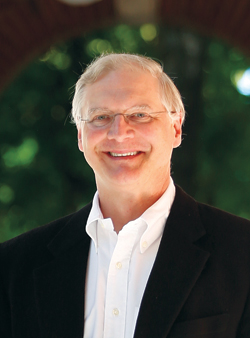
“All kids have the right to learn something new every day.”
鈥擠avid Lubinski
More than half a century later, Benbow鈥檚 NSB study echoed that concern: 鈥淭he possibility of reaching one鈥檚 potential should not be met with ambivalence, left to chance, or limited to those with financial means. Rather, the opportunity for excellence is a fundamental American value and should be afforded to all.鈥�
A look at the 鈥淲ho Rises鈥� paper confirms the benefit to society of identifying and nurturing these students early in their academic lives. Lubinski, Benbow and Kell discussed the accomplishments of these students, who entered the study in the early 1980s, in the paper鈥檚 abstract:
鈥淭heir awards and creative accomplishments by age 38 鈥� illuminate the magnitude of their contribution and professional stature. Many have been entrusted with obligations and resources for making critical decisions about individual and organizational well-being. Their leadership positions in business, health care, law, the professoriate and STEM (science, technology, engineering and math) suggest that many are outstanding creators of modern culture.鈥�
At 38, the study participants鈥� accomplishments included 128 creative written works, more than 1,000 fine arts achievements, 392 refereed STEM publications, 820 contributions in software development and patents and more than $25 million in grants.44 percent, or 142 people, held doctoral degrees (Ph.D., M.D., or J.D.), and eight of them held joint doctoral degrees. To provide perspective, just 2 percent of the general population holds doctoral degrees.
- 11.3 percent had tenure at accredited institutions; 7.5 percent had tenure at research-intensive institutions.
- Employers included Fortune 500 companies, major law firms, large medical facilities and research universities.
- Major awards came from the U.S. Departments of State and Justice, the CIA, the National Science Foundation, Intel Corp., NASA, the Wall Street Journal and more.
Some individuals in this cohort had far outpaced their peers.
- One person was a national policy adviser to a U. S. president.
- One person produced 500 musical productions鈥攎ore than 57 percent of the total reported.
- Three people made 100 software contributions each鈥攏early 44 percent of the total.
- Seven people received more than $1 million in grants; their total of nearly $20 million was more than 77 percent of the total sample鈥檚 grant funding.
- One person received $9 million in grants.
- One person had already founded three companies, and another raised more than $65 million in private equity investment to fund his company.
鈥淎cceleration combined with enrichment should be considered as best practices for gifted students. Acceleration plus enrichment, not the other way around, seems to be the most effective method,鈥� she continued. 鈥淪peeding up learning and not going deeper or making it more complex would seem empty.
鈥淣ow we have Advanced Placement classes and we have pullout programs that allow high-school students to take college classes. We just need access to these programs that are already in place, but don鈥檛 reach to young-enough ages. The question we should be asking is 鈥榓re you ready to take this course?鈥� and not 鈥榓re you old enough to take this course?鈥欌�滾ubinski points out that all students, not just those who are highly gifted, deserve an individualized curriculum that suits them.
鈥淎ll kids have the right to learn something new every day,鈥� he said. Put another way, the idea is to teach students only what they don鈥檛 already know.
On the federal level, the educational focus has been on failing students. The No Child Left Behind Act and Race to the Top Fund are just two examples. Exceptional students receive just a small fraction of that support. Benbow stressed that supporting exceptional students benefits all students.
“We鈥檝e found the best thing is for these students to have regular contact with their intellectual peers.”
鈥擠avid Lubinski
鈥淎dvocates for the gifted are not arguing for shifting resources away from traditionally underserved students,鈥� Benbow said. 鈥淎s a nation, we need to do two things. We need to raise the floor for our lowest performing students. And we need to raise the ceiling for our students with the highest potentials.鈥�
Raising the ceiling doesn鈥檛 necessarily mean spending more money, she added. It could include training teachers to recognize talent in their students, especially in minority groups and in students that show spatial intelligence.
鈥淚t means greasing the skids for students to access more challenging curricula on an accelerated basis鈥攂y taking classes above their grade level or enrolling early in college courses,鈥� she said. 鈥淚t means requiring states and districts to track and provide data on gifted students just as they currently track data on other subgroups.
鈥淭hat said, we do need federal support for more research into identifying and developing our most talented students, especially minority students or those living in poverty. There is much we don鈥檛 know that can inform efforts to develop our future innovators.鈥�
Lubinski urges parents of gifted students to seek out opportunities and advocate for their children. 鈥淲e鈥檝e found the best thing is for these students to have regular contact with their intellectual peers and be able to learn at the pace and depth that is appropriate for them,鈥� he said. 鈥淔or example, if you鈥檙e a seventh-grader doing college-level math, you won鈥檛 easily find peers, and that鈥檚 an age where it is incredibly important to fit in.鈥�
Lubinski said that one student referred to the that many gifted students attend as an 鈥渋noculation鈥� to help students get through the school year.
Lubinski and Benbow plan to track participants well past retirement age. 鈥淭he study is designed to look at our cohorts in different phases of life鈥攁s students, as professionals, as they gain eminence.
As they get older, we鈥檙e looking to see what other factors make a difference in their trajectories鈥攈ealth issues, family issues, who they marry,鈥� he said. 鈥淎nd they鈥檒l be tracked into retirement, because we believe those years are a valuable, untapped resource. These people may not want to work or teach or research anymore, but they can mentor those who come after them.鈥�
Who are the ‘Scary-Smart?’
Here are three members of the Study of Mathematically Precocious Youth who tested at the top 1 in 10,000 level.
Terry Tao, mathematician
- Scored double 800s on his SAT鈥攚hen he was 11.
- Earned bachelor鈥檚 and master鈥檚 at 16.
- Fulbright Scholar at 17. Earned Ph.D. at 21.
- At 22, working with Ben Green, solved part of one of the great open questions in number theory with the Green-Tao theorem, which states that there are arbitrarily long arithmetic progressions of prime numbers.
- At 24, became youngest-ever full professor at UCLA. Won the Fields Medal in 2006 at 31.
Susan Athey, economist
- Attended Duke University from 16, earned three bachelor鈥檚 degrees.
- Ph.D. from Stanford at 24.
- First woman to win the John Bates Clark Medal, regarded in economics as second only to the Nobel Prize.
- Professor at MIT, Harvard, then Stanford.
- Made reputation by reinforcing foundations of traditional game theory and applying that insight to auctions, industrial structure and macroeconomics.
- Serves as chief economist for聽Microsoft.
Colin F. Camerer, behavioral economist
- Invented field of neuroeconomics, the use of data on brain processes to suggest new underpinnings for economic theories, which explain how much people save, why there are strikes, why the stock market fluctuates, and more.
- B.A.聽from聽Johns Hopkins at 17.
- M.B.A.聽at 19 and Ph.D.聽at 21, both from the University of Chicago.
- Taught at Kellogg,聽Wharton and Booth before moving to Caltech in 1994.
- Won MacArthur 鈥済enius grant鈥� in 2013.
Learn more at