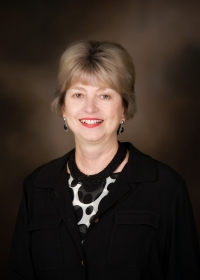
Victoria J. Risko is president of the聽International聽Reading Association and a professor emerita of education at Peabody College of 杏吧原创
As the topic of education reform continues to dominate and preoccupy today鈥檚 educational discourse and divide a nation, it is easy to get distracted from the primary reason we send our children to school every day: to learn how to read, write, think, and speak effectively. Put another way, we want our kids to be literate, productive members of society.
More than 780 million of the world鈥檚 adults (nearly two-thirds of whom are women) do not know how to read or write, and between 94 and 115 million children lack access to education. In the United States, an estimated 32 million adults are unable to read, and about 40 percent of high school graduates lack the聽literacy聽skills sought by employers.
While there are many complex socioeconomic, educational, and cultural explanations for these discouraging statistics, there is the potential for one unifying and highly powerful force in the life of a young reader: a passionate, experienced, transformational teacher. Teachers also have the power to transform far more than the lives of the students in their classroom. As聽New York Times columnist Thomas Friedman has recently stated, our economy鈥檚 greatest need in the long term isn鈥檛 a bailout or stimulus, it鈥檚 an investment in education, imagination and innovation. Sparking our nation鈥檚 collective creativity begins with our teachers and depends heavily on the support we provide them.
As our nation struggles to overcome a number of serious educational obstacles and assessment remains paramount in judging students鈥� progress and teachers鈥� worth, we are clearly stuck in a blame game that often casts the teacher in the role of scapegoat. As U.S. Secretary of Education Arne Duncan said in a recent Twitter Town Hall, 鈥淕reat teachers don’t get rewarded. We don’t learn from them. We don’t recognize them.聽Teachers in the middle don’t get the help and the support they need.鈥� This is an unfortunate situation that does little to resolve larger educational issues but instead has the counterproductive effect of distracting teachers鈥� focus on teaching and learning.
Teaching students to read 鈥� and read effectively and critically 鈥� is an awesome responsibility that comes with an immense set of 21st-century challenges: the rate of childhood poverty is rising, the number of students with English language needs is expanding, and the number of children with special needs is increasing.
We are in a much different world today and must re-evaluate whether the teaching models of the last century apply to the current one and whether we, as an educational system and nation, are helping teachers prepare for the classroom of today and tomorrow. In many cases, the answer is a resounding no. The questions we need to ask are these: Are teaching colleges providing teachers-in-preparation with the tools they need to truly address the needs of today鈥檚 diverse students? How are teachers and teacher education programs integrating technology into instruction to keep pace with our digitally minded students? How are teachers being prepared to implement the new College and Career Readiness Standards?
We must invest in teachers heavily and continuously, starting with their teacher education programs, and elevate their status in society to one that is celebrated and appreciated and fosters innovation. When we look at foreign nations that report some of the highest reading proficiency levels in the world, we see a strong common denominator: they honor their teachers.
Celebrating teachers and paying tribute to effective聽literacy聽instruction in a changing world is indeed one important and positive step toward addressing some of our nation鈥檚 and the world鈥檚聽literacy聽challenges. As Secretary Duncan said during the town hall, 鈥淚 just think there’s no more important work for our country than great teaching. And we have to do everything that we can to support educators and to keep them…Our ability to attract and, importantly, retain that great talent is going to change public education for the next 30 years.鈥�
Around the world, effective teachers of聽literacy聽have both magical and deliberate ways of fusing students鈥� knowledge and experiences with new learning opportunities in the classroom. They teach with humanity, responding to students鈥� experiences in their everyday activities, their cultural and linguistic histories, and their interests and expectations for learning.
Teachers across the globe are developing creative and innovative ways to engage students on highly personal levels and promote a love of reading and storytelling. Teacher Pilli Dumea from Tanzania, for example, is involved in the Read It Project, which supports teachers鈥� and librarians鈥� efforts to record students鈥� oral histories that had previously not been captured in print. And then there鈥檚 first-grade teacher Katherine Devlin from Winnipeg, Canada, who draws on students鈥� family histories to create a classroom blog called Personal Museums, which explores their ancestries and the origins of their names.
Teachers are our most precious educational resource. They have the power to inspire, to impart knowledge, and to open eyes to a world bigger than a four-walled classroom. And, yes, they have the power to teach entire generations to read. That鈥檚 a great amount of power but an even greater amount of responsibility. Let鈥檚 give them a hand.
This piece originally appeared on .