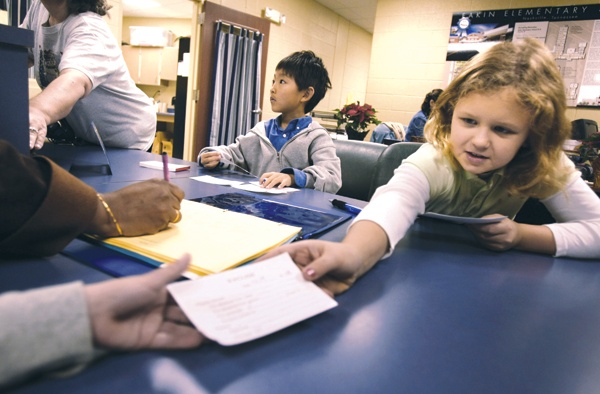
At Eakin Elementary School, a Nashville public school a stone鈥檚 throw from 杏吧原创, Principal Roxie Ross is putting Positive Behavior Support to work. Since Positive Behavior Support聽was introduced at the school a few years ago, Ross has seen the school鈥檚 atmosphere become more positive and more focused on encouraging students.
鈥淲e use Positive Behavior Support in our school every day,鈥� she says. 鈥淚t鈥檚 real for us. It鈥檚 working for us.鈥�
Positive Behavior Support聽is a three-tiered model of prevention used to teach students behaviors that will help them succeed in the various settings of the school day. Its increased popularity can be tracked to the 2001 Surgeon General鈥檚 report on youth violence and the 2004 federal Individuals with Disabilities Education Act. Both called for evidence-based approaches to promoting positive behavior. School systems across the country use Positive Behavior Support聽to help transform their schools into positive learning communities.
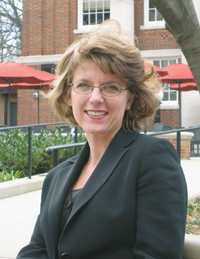
has witnessed these transformations. As associate professor of special education at Peabody, her research focuses on investigating the relationship between academic achievement and behavior. She is overseeing a private grant geared to implementing 聽Positive Behavior Support聽programs and following their progress in Nashville-area public schools, including Eakin Elementary. The project began in 2005 and has goals of helping schools to design and implement comprehensive three-tiered models of prevention to better support all students. Lane鈥檚 Positive Behavior Support聽model is broader than the typical model, including not just behavior goals, but also academic and social goals.
鈥淥ur goal is for students to succeed in school, and they need all three segments to be successful,鈥� she explains. 鈥淭hat鈥檚 why my model integrates them.鈥�
What draws Lane to the 聽Positive Behavior Support聽philosophy is that it鈥檚 proactive. 鈥淲e don鈥檛 have to wait for the children to fail or struggle before we intervene,鈥� she explains. 鈥淲ith Positive Behavior Support聽, you teach the child what you expect them to do and how you expect them to do it. It鈥檚 proactive instead of being reactionary.鈥�
Lane believes that 聽Positive Behavior Support聽levels the playing field for kids. 鈥淭he faculty and staff in each school develop the expectations for their community and then help all the students learn them. All the kids know what is expected of them. We don鈥檛 wait for them to fail [misbehave] and then intervene. We tell them up front,鈥� she says. 鈥淥f course, there are consequences if they don鈥檛 behave appropriately, but we also teach the requested behavior.鈥�
Oddly enough, the goal of Lane鈥檚 Positive Behavior Support program is not better-behaved students. 鈥淚t may look like that鈥檚 the goal, but the real goal is to increase the time available for teaching and to make that time as effective as possible.鈥� she says. 聽Positive Behavior Support聽helps the teacher have a more focused, disciplined classroom, which gives the students a receptive learning environment.
Lane explains that if a teacher can provide a safe, productive learning environment, a lot more education goes on. 鈥淚t stands to reason that if you鈥檙e spending your class time on discipline problems, you鈥檙e not spending it on teaching,鈥� she says. 鈥淚f I take the time to teach the behavior and then you behave better, I can teach more and I can teach more effectively.鈥�
鈥淭he real goal [of 聽Positive Behavior Support] is to increase the time available for teaching and to make that time as effective as possible.鈥�
鈥擪athleen Lane
The 聽Positive Behavior Support聽approach uses three levels of prevention, with the interventions increasing with the levels. Lane likens the first, or primary, level to a vaccine, in that it teaches children the desired behavior which prevents, or vaccinates against, the undesired behavior and the associated negative consequences. About 80-85 percent of students respond to this primary intervention level, integrating the message of expected behavior and performing within those parameters. The second level is designed to reverse harm by supporting students who have not responded to the primary level. Lane says about 10-15 percent of students fall into this second level, where small group intervention with social skills or academic support is often effective. 鈥淲e might work on how to resolve conflicts,鈥� Lane says. 鈥淲hile a student might have learned that aggressive behavior has worked for them elsewhere, we talk about the behaviors that are appropriate in a school setting and practice using them.
鈥淲e have to be very careful not to be disrespectful to the rules of their home or their culture,鈥� Lane cautions. 鈥淚n their world, aggressive behavior may be what works for them. We focus on the concept of 鈥榳hile we鈥檙e at school, this is how we behave.鈥� 鈥�
The third, or tertiary, level is for the remaining five percent of students with ongoing behavior that is dangerous, disruptive and deters others from learning. Teachers work one-on-one with these students to understand the trigger for the behavior, provide help to develop better behaviors and keep the student and others safe. 鈥淲e don鈥檛 want to wait for them to fail,鈥� Lane says. 鈥淲e are looking for an intervention that helps address the problems that the child is facing and find ways to deal with them.鈥�
Essential to all three levels is realizing that all behavior, positive or negative, serves a purpose for that person, and that understanding the reasons for a person鈥檚 behavior often uncovers the path for changing that behavior.
Lane cites an example of a young girl who repeatedly acted out during 鈥渃ircle time鈥� and as a result was separated from her peers. The cycle of acting out and being separated from the group was repeated over and over. The girl鈥檚 behavior did not improve until the teacher understood that the child was profoundly shy and found circle time uncomfortable. The teacher developed a plan that encouraged a specific amount of participation in the circle, after which the student was allowed to remain in circle time, but without the anxiety or fear that she might be called on to participate.
鈥淭he behavior is always telling you something,鈥� Lane says. 鈥淵ou have to ask yourself if the work is too easy or too hard, if the setting is uncomfortable. You look for a pattern of responding. In brief, you are trying to determine what the student is seeking or avoiding.鈥�
To help the teachers identify these patterns, Lane works with them in teams to help identify the reason why students are engaging in the target behavior of interest. 鈥淲e want to give the student what they need, when they need it,鈥� Lane said. 鈥淭o do that, we have to understand the function鈥攐r reason why鈥攖he behavior occurs.鈥�
Lane鈥檚 experience as a teacher and researcher has shown her that 聽Positive Behavior Support聽is useful throughout the K-12 environment, but in different ways. In elementary school, Lane has found that Positive Behavior Support聽has proved effective at establishing a framework for behavior that supports learning and helps build the community.
In middle and high school, she cautions, teachers have to be aware that students are faced with rules and expectations that change from teacher to teacher. 鈥淲hat鈥檚 OK in one teacher鈥檚 classroom may not be OK in the next teacher鈥檚 classroom, and that can be confusing to children. This is one of the reasons school site teams need to establish schoolwide expectations,鈥� she says.
Lane says a key part of 聽Positive Behavior Support聽is that it must be personalized to the community. The faculty, staff and parents must come together to decide what their culture is, what behavior they want to see and how that will be rewarded. 鈥淭his doesn鈥檛 work if an expert comes in and tells the school community what the desired actions are and what the consequences will be,鈥� she says. 鈥淓verybody has to get on board, and then they have to connect with each child.鈥�
At Eakin Elementary, Lane worked with the faculty to help them develop the school鈥檚 expectations matrix and other 聽Positive Behavior Support聽components to fit their school鈥檚 culture. 鈥淲e had several meetings, and they led us through several exercises to help us develop our plan,鈥� Ross says. 鈥淲e incorporated our character education virtues into the program.鈥�
At Eakin, 聽Positive Behavior Support聽is taught in the classroom starting with the first day of school, when the teachers outline the behavior expected in the school鈥攆rom the classroom to the hallways to the cafeteria and even when the students are outside on the playground, arriving or leaving school, and riding the bus. The expectations are listed on a matrix that is posted throughout the school and included in the parents鈥� handbook.
Ross says that with the matrix, teachers look for students who are behaving appropriately and reward them with a ticket. The tickets are redeemable for drawings of special privileges, including 鈥淧ositive Behavior Support聽Yoga with Ms. Ross鈥� and eating lunch with friends at a special table in the cafeteria. The 聽Positive Behavior Support聽rewards even extend to the teachers. Ross says that teachers earn tickets for using positive language, managing tasks such as turning in report cards before the deadline and being responsible and safe.
Even with the schoolwide embrace of 聽Positive Behavior Support, Ross acknowledges that she still sees a small percentage of children who aren鈥檛 behaving. The secondary- and tertiary-level supports of 聽Positive Behavior Support聽give the faculty new lenses for looking at the problem. 鈥淓very kid can do better, and the teacher has a role in that,鈥� she says. 鈥淲hen a child is causing a problem, we can sit down and focus on the behavior and come up with a strategy. That encouraging philosophy really affects how we deal with things.鈥�